Published July 17, 2024
The Wealthy 1000: These Arizona ZIP codes made the cut

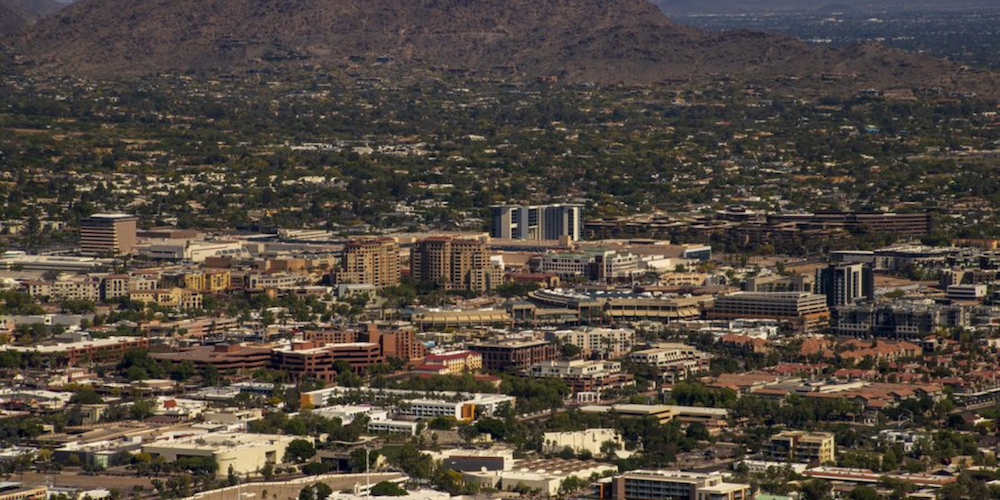
The Wealthy 1000: These Arizona ZIP codes made the cut
By Joanne Drilling and Paul Thompson

The plot thickens when it comes to the Valley's wealthiest ZIP code.
A new proprietary ranking from The Business Journals, dubbed the Wealthy 1000, crowns Paradise Valley's vaunted 85253 ZIP code as the Grand Canyon State's wealthiest — and the No. 418 wealthiest ZIP in the country. The findings offer additional context to Phoenix Business Journal's 2024 rankings of Maricopa County's Wealthiest ZIP Codes and calls into question the elevated standing of Scottsdale's 85262 ZIP code, which overtook Paradise Valley as Maricopa County's richest ZIP in our local 2024 rankings.
So, what gives?
It all boils down to your definition of wealth. Both metrics are built upon the U.S. Census Bureau's 2022 American Community Survey, which does indeed rank 85262 above 85253 when it comes to one key metric: 2022 median household income. But the Wealthy 1000's methodology also takes home value data from Zillow into account among a variety of weighted factors.
The inaugural Wealthy 1000 formula analyzed income, home equity, estimated savings, poverty rates and population density to identify areas with the greatest concentration of wealth. The ranking also included a minimum threshold of $70,000 of per-capita income, to eliminate ZIP codes with high population density but otherwise lower income levels coupled with relatively high poverty rates.
Eleven Arizona ZIP codes rank among the nation's 1,000 wealthiest areas, and Paradise Valley leads the way locally by landing at No. 418. By this nuanced ranking, 85262 isn't even among the top five ZIP codes in Scottsdale, according to the Wealthy 1000. Let the debate begin.
Here are all the Arizona ZIPs that made the list:
Paradise Valley's 85263 (No. 418)
Scottsdale's 85251 (No. 430)
Scottsdale's 85258 (No. 440)
Phoenix's 85018 (No. 615)
Tucson's 85750 (No. 623)
Scottsdale's 85266 (No. 667)
Carefree's 85377 (No. 776)
Scottsdale's 85255 (No. 830)
Scottsdale's 85262 (No. 987)
Top of the List
The top 25 ZIP codes from the Business Journals Wealthy 1000 were clustered around the nation’s most populated metros, including New York, San Francisco, Chicago, Miami and Boston.
Not surprisingly, nine of the top 10 ZIP codes were in the New York City metro area, an area among the leaders in million-dollar earners.

California (190) had the most ZIP codes on the list, followed by New Jersey (111), New York (95), Massachusetts (79) and Florida (57).
Among California’s ZIP codes, 73 were in the San Francisco area. Los Angeles accounted for 20 ZIP codes, while San Jose (12) and San Diego (10) also exhibited high wealth density.

In large part because of the concentration-of-wealth focus, some states were not represented among the Wealthy 1000, including Alaska, Montana, North Dakota, South Dakota, Wyoming and Vermont.
Although some of those states have higher-than-average GDPs per capita, some also have a high concentration of vacation homes and ranches, which were not factored as official households for this analysis.

Poverty rates also tempered the weighted formula, resulting in the exclusion of all ZIP codes from Mississippi, Louisiana and West Virginia.
Conversely, education levels — as measured by the Census — were considered in The Business Journals' proprietary formula.
Among the top 10 ZIP codes, an average 78% of residents achieved a bachelor’s degree or higher. That tacks with a recent Georgetown University report that determined Americans with a bachelor’s degree can expect to earn an average of $1 million more over the course of a lifetime than those without.
Recent wealth migration favors less populated states
That said, American money is on the move.
IRS data found Louisiana, Montana and Vermont all saw the largest increase in million-dollar earners from 2020 to 2021.
Additionally, the Sun Belt has experienced a surge in migration over the past decade — a trend that accelerated during the pandemic.
“Many high-income people whose jobs were remote moved to less-expensive areas,” said Scott Fulford, senior economist at the Consumer Financial Protection Bureau and author of "The Pandemic Paradox: How the Covid Crisis Made Americans More Financially Secure." “Top destinations included Montana and Idaho, as well as other states such as Vermont and West Virginia, which are close enough to big metropolitan areas to still make the occasional trip.”