
Categories
Real Estate & Economic GrowthPublished March 18, 2025
Phoenix remains among top global data center markets, with strong demand closing 2024

By Jorge Ramos
The Phoenix metro’s demand for data shows no signs of slowing down after a strong second-half finish to 2024.
The Valley remained one of the nation’s top data center markets in terms of operational capacity and saw three consecutive years of increased colocation leasing activity – when tenants rent server space in data centers – according to a report from Cushman & Wakefield. Last year saw 669 megawatts of colocation leasing activity, surpassing 2023’s 643 megawatts and 2022’s 411 megawatts.
Megawatts is the unit of measurement for wholesale colocation leasing, and one megawatt is equivalent to 1 million watts.
The Phoenix metro had a colocation vacancy rate of 2.5% during the second half of 2024, and that matches other “high-performing” established markets, the report found. The tight market coincides with the 84% preleasing rate for both planned and under-construction data centers.
There are 478 megawatts of data center capacity under construction in the Valley and a whopping 949 megawatts planned for future data center construction. Overall, Phoenix colocation market has 24 megawatts of available capacity with the largest chunk being nine megawatts.
“There is so little available space in many of these markets that is suitable for large wholesale occupiers of data centers,” said John McWilliams, Cushman and Wakefield’s Head of Data Center insights. “What they’re doing is looking to that under construction and even in some cases looking at the planned pipeline to satisfy their capacity.”
Overall, the Phoenix metro has 1,541 megawatts in operation, not including captive centers or information communication technology.
That puts the Valley in the ranking as the No. 4 market in the world for total operational capacity, behind Virginia, Portland/Eastern Oregon and Columbus, Ohio.
McWilliams credits Phoenix’s desirability as a data center market to several factors — proximity to Southern California, Arizona’s “business friendly” incentives for development, low natural disaster risk and strong fiber infrastructure.
Phoenix metro’s data center desires shift
During the second half of 2024, the West Valley saw a surge of activity buoyed by large land acquisitions by big-time data center players. Most notably, Amazon purchased 220 acres in Laveen Village for $277 million for a potential data center campus, per previous reporting by the Business Journal. The 220-acre site is located near Loop 202 and Dobbins Road and just eclipses QTS Realty Trust’s $246.8 million acquisition of 206 acres in Avondale.
The increased activity during the second half of 2024 is part of a shift of land acquisition to the West Valley from the East Valley and Phoenix proper. Cushman & Wakefield’s data center report cites cities including Mesa, Chandler and Phoenix as having concerns about power demands and noise pollution near residential projects.
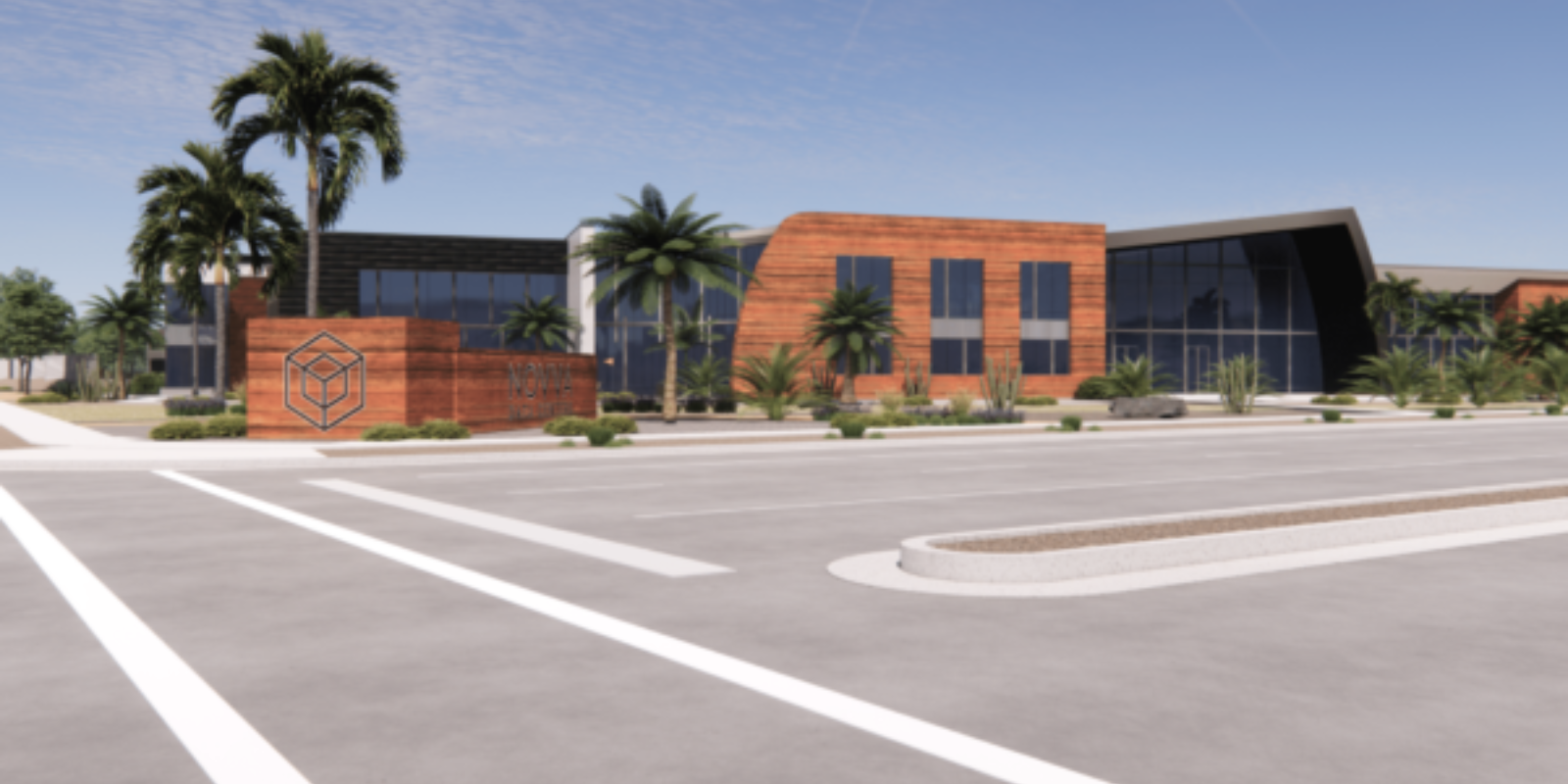
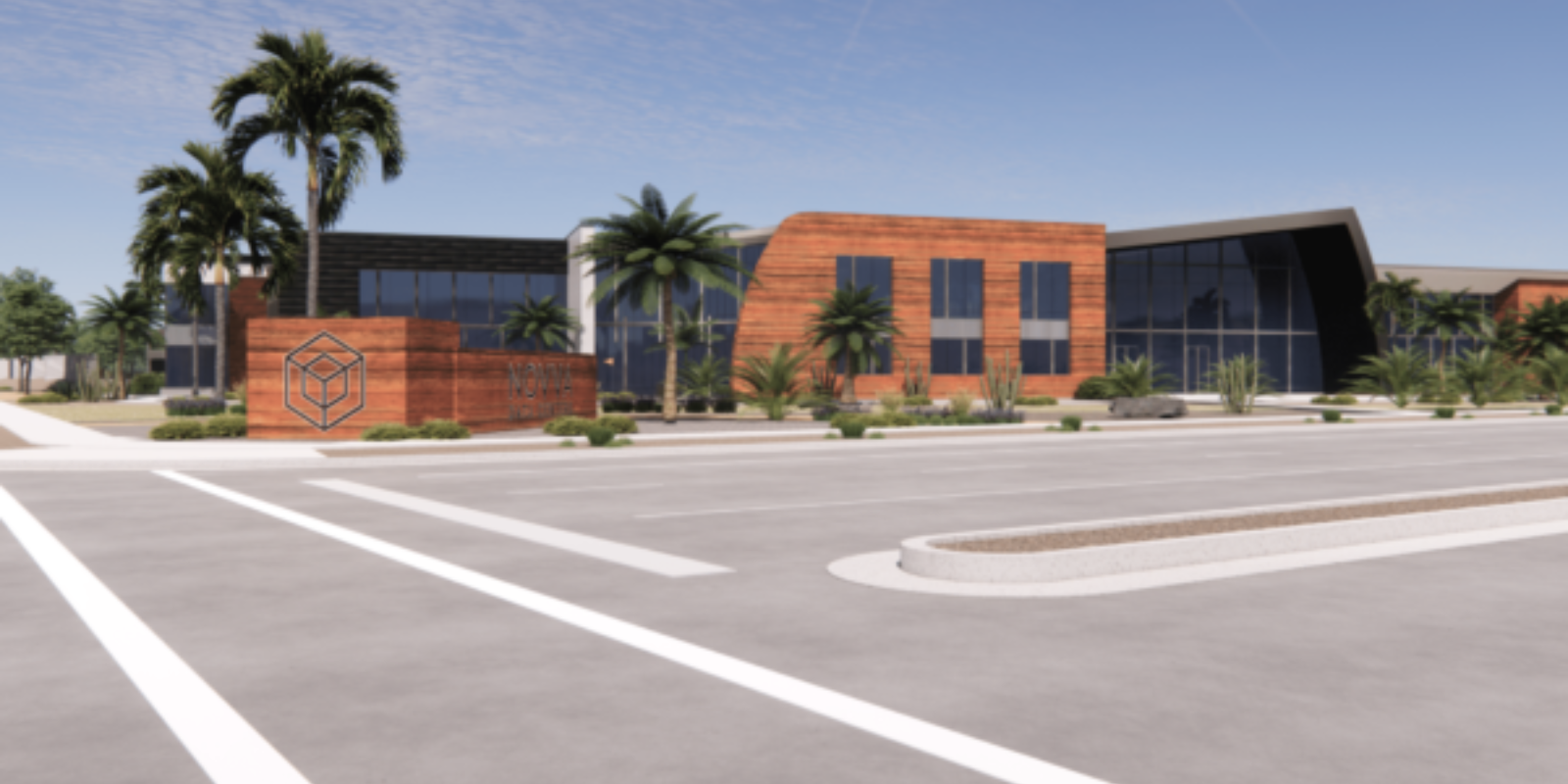
Wes Swenson, the CEO and founder of NOVVA Data Centers who recently received the go-ahead for his $3 billion Mesa data center campus, understands those concerns all too well as his company has six data centers built or under construction — including the Mesa campus.
Before this recent trend, the East Valley had approved a slew of data centers. Mesa alone has been a hotbed with the presence of Google, CyrusOne, Amazon and EdgeConneX
Swenson explained that, as the Phoenix data center market continues to grow in the coming years, companies will have to be more mindful of the Valley’s rapid residential expansion.
“The thing with Phoenix’s growth in housing is, if I build on the edge, someday it won’t be the edge anymore,” Swenson said. “I think a lot of planning around industrial areas is critical because the growth will catch up to it on the edge.”
The demand for data centers doesn't show signs of slowing down in the near future, and Swenson believes that demand for data crunching capacity will continue to exist in some capacity.
"I believe in, death taxes and data centers," Swenson said. "Those are three things I can count on in life since the internet began. It may grow slower, it may grow faster, but there won't be an end to it. And and the only thing I would remind people of is that we are a byproduct of use. We aren't developing these to just develop them."
Final Thoughts
As Phoenix cements its position as a top global data center hub, the city’s growth is shaping the future of business, technology, and even real estate. For those relocating from out of state, this surge in data center activity signals job opportunities, economic expansion, and rising demand for housing in high-growth areas—especially in the West Valley. With major tech players securing land and infrastructure expanding rapidly, Phoenix is not just a place to live but a city on the rise.
Whether you're moving for work, investment, or lifestyle, now is the time to explore Phoenix’s booming real estate market.

John Sposato
Co-Founder / Co-Operator | Arizona Home Group | Keller Williams Realty Sonoran Living
or another way